1085–86
Domesday Book
Domesday Book, The National Archives says, is a detailed survey and valuation of landed property in England at the end of the 11th century.1 The survey was ordered by William the Conqueror at Christmas 1085 and undertaken the following year.1 William's survey of England, Domesday Book (1086), recorded a land governed by feudal ties.2
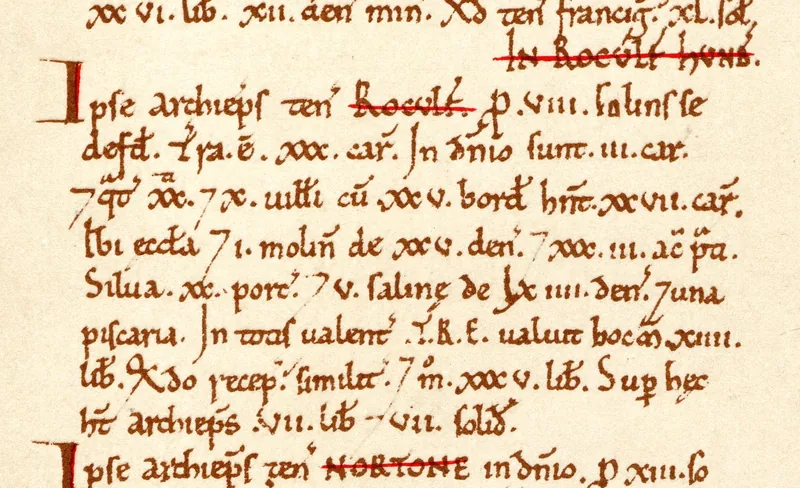
It is not a census of the population, and the individuals named in it are almost exclusively land-holders.1 The survey does not cover London (city), Winchester, Northumberland and Durham or much of north-west England; the only parts of Wales included are certain border areas.1 Norfolk, Suffolk and Essex are in a separate volume, known as Little Domesday because of its smaller size.1
Commissioners asked how land had been held on the last day of the reign of Edward the Confessor (5 January 1066) — abbreviated in Domesday as TRE — when it was granted by King William, and as it was in 1086.1